Fat transfer sounds great. A modest enlargement, no scars, no implants. Wonderful.
Right?
...right?
...?
Too good to be true? Sometimes, yes.
We can never get away from the fact that there are some people for whom IT. JUST. WON'T. WORK.
Sometimes, that is not easily predicted either.
So, it is worth understanding what we need to look at when considering whether someone is a candidate for fat transfer. This will help you figure out whether the technique could work for you, or whether you need to look at something else. I am no great proponent of breast implants, but these days, there are patients for whom I recommend a small (like 125cc small) implant rather than fat transfer. Let's break it down.
I wrote (at length) about how fat transfer works in a previous article. Go have a read of that first if you want to wrap your head around the basics of fat transfer and why fat transfer is a permanent volume enlargement when done properly.
Step 1: What is the goal?
This one is pretty easy, and seemingly there is enough information out there now that most people come in with a good idea of what can be achieved and whether it will be enough for them.
I see two groups of people typically who are looking at fat transfer: the first group are the ladies for whom implants are never an option due to concerns about having a foreign body in the breast (and fair enough!); the second group are ladies who are looking for an enhancement that is subtle, and for whom even the smallest implant would be too obvious.
And for both of those groups, the goal is the same: about a 1 cup size increase, no more, and with a natural shape and position to the breast that typically is not possible with a silicone implant.
I guess I should also add that, yes, you can do fat transfer twice if you want more than a 1 cup size increase, but in order to have fat transfer twice you need to be able to have liposuction twice...and you better read about Step 3 below if you're wondering how that could work.
Step 2: Assessing the breast.
This is the bit that normally gets overlooked.
The breast does need to tick certain boxes for fat transfer to be a good option.
The ideal breast for fat transfer augmentation shows well defined boundaries, is not too tight and not too "loose" or stretched (eg. by pregnancy), with a good position on the chest wall. In other words, the ideal breast for fat transfer is well shaped and well positioned and all we want to do is make it a bit bigger.
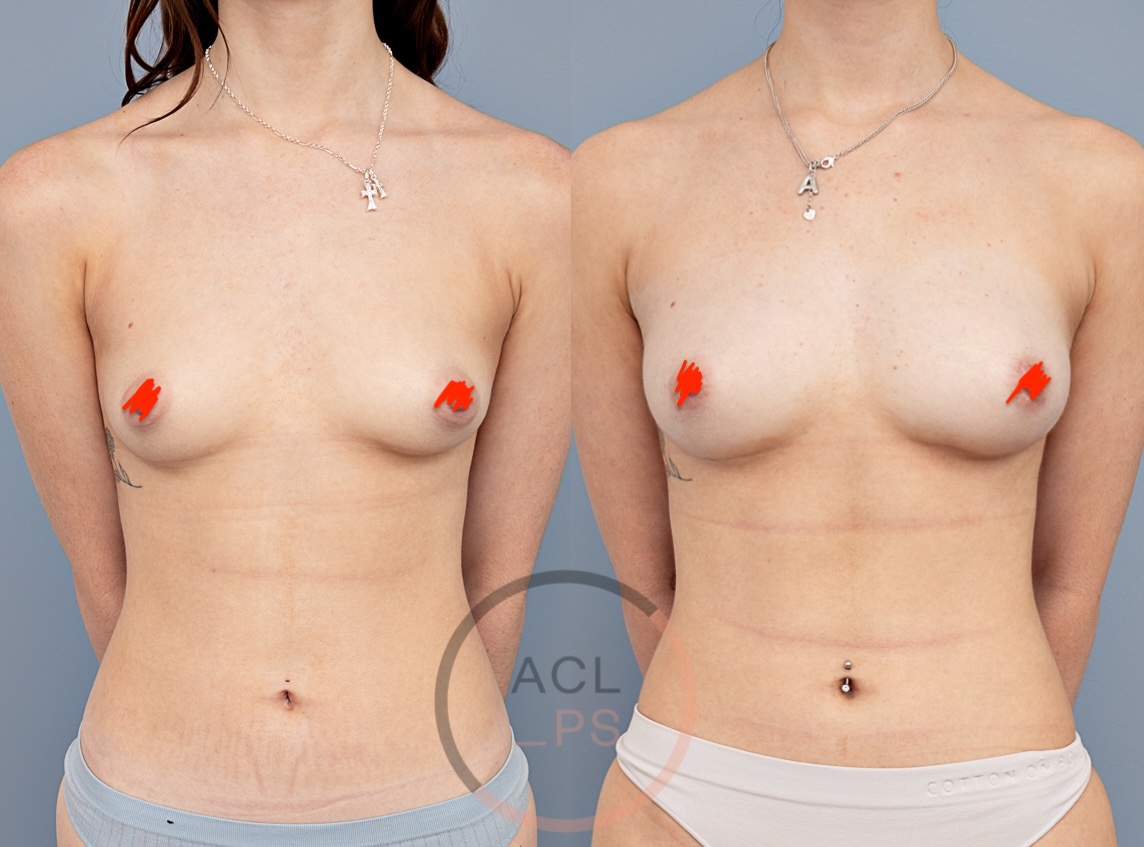
Assessing the breast involves a couple of different considerations, which again depends on the different people who might consider fat transfer.
There are of course the young (typically) ladies who have never been pregnant, who have very small natural breasts. For these ladies, the major consideration is whether their (small) natural breasts show much in the way of crease definition. Not all breasts have a well defined breast crease (they may have a so-called "type 0 fold") which is important to recognise because it means they will have less intrinsic support of the lower pole of the breast for any injected fat. The risk here is that the fat can "drop" below the natural breast footprint, essentially resulting in something like a double bubble deformity. Which is bad.
So, for those cases, I sometimes recommend that a breast crease be formally stabilised or reconstructed. This does require a small scar in the planned breast fold (bugger) but I think it is far better than some other published techniques (there is a "closed" technique involving the use of very long loop of suture that passes around the entire breast base which has been popularised by a mad bloke in Miami which I think is not a great technique but, along with his equally ridiculous Brava/EveBra external expansion devices, has become a thing which is being discussed on patient forums).
On the other hand, I also see those ladies (typically after having kids but not always) who present with a mild degree of breast ptosis/droop and who want fat transfer, and in these cases the important decision is whether the natural breast can actually support the additional volume of a fat transfer without worsening droop. In these cases, what we have to consider is whether a mastopexy is a necessary step to create sufficient internal structure in the breast to allow the fat transfer to be supported in the correct position.
Take these two examples:
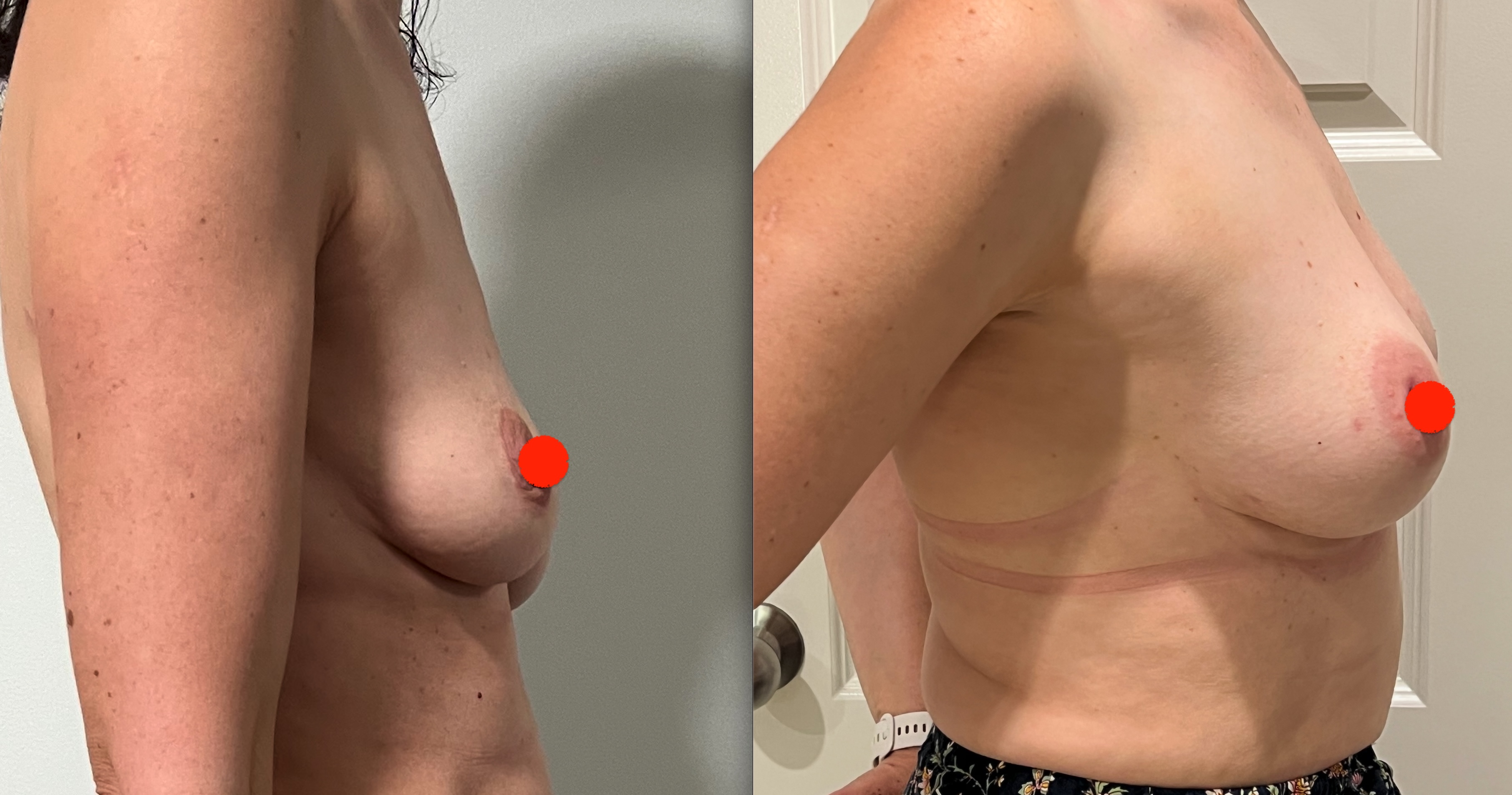
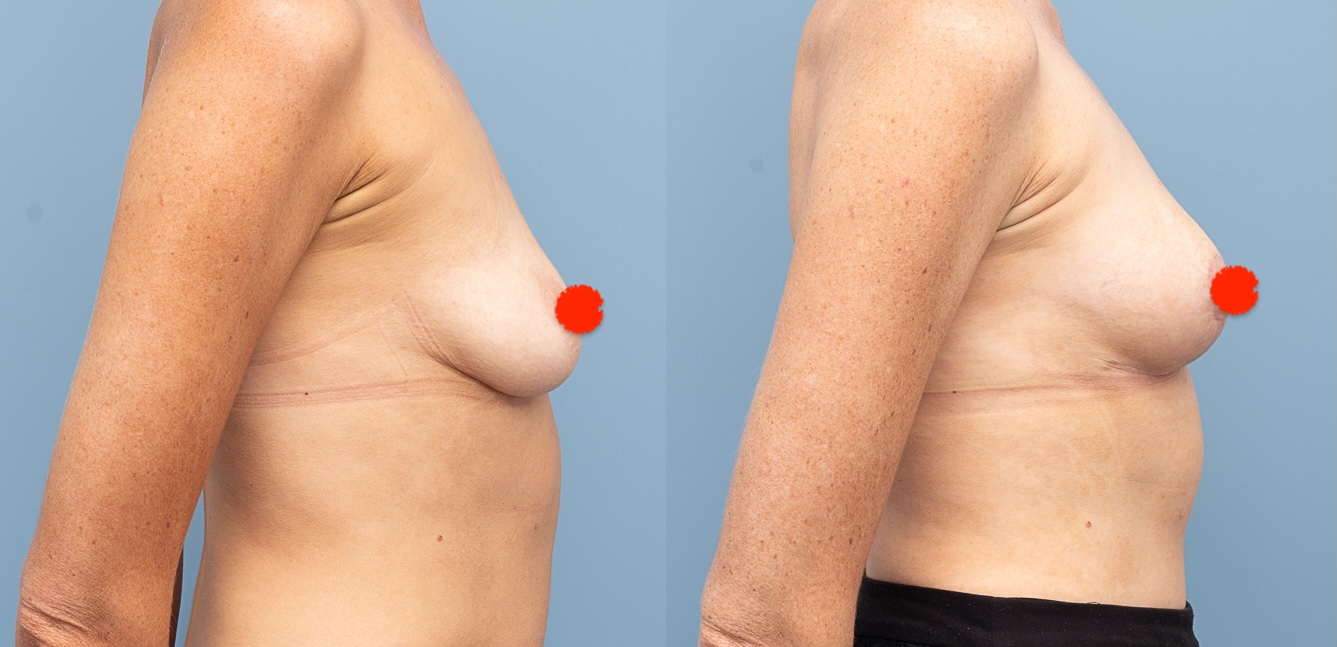
The clear difference in outcome here is in the lower pole. A mastopexy allows us to create a tighter, firmer lower pole which clearly will also mean a lifted breast. In such cases of mild ptosis, the decision to perform a mastopexy may simply come down to patient preference regarding their outcome. For the two ladies shown above, the decision regarding a mastopexy has been driven entirely by their preference for a certain aesthetic outcome.
If a patient present with more significant ptosis, there may be a situation where there is simply no choice regarding the mastopexy. Take a look at this example below:
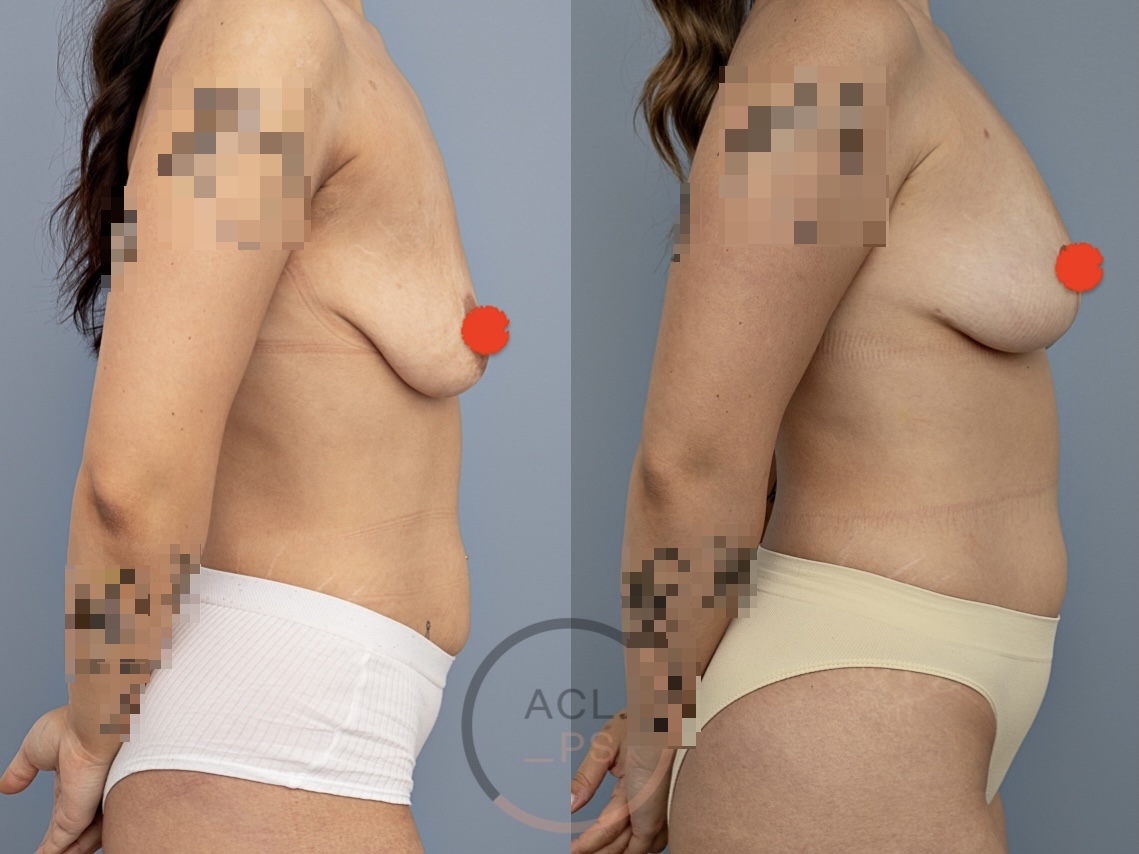
All of this ties back into the concept that I have spoken about before, which is that fat transfer itself has absolutely no structure. We rely entirely on the structure of the breast tissues to support that graft into the shape and position that we want. So for a young woman with a tight natural breast, that will be pretty straight forward. For a lady whose breast is softer, looser or a bit droopier, then we may run into an issue.
And the last thing to think about when assessing the breast is the areola.
Huh?
Yeah, well, see the thing is that the areola will sometimes stretch in response to the addition of volume - whether that be an implant or a fat transfer - and so we have to consider whether areolar enlargement is good or bad for a given patient, and if it will become a problem, it may require pre-emptive management with some sort of areolar tightening procedure (there are a few options; different topic, and something I have been meaning to write about...).
Step 3: The donor sites.
Okay, the last one. The obvious one. The big one (or the not-so-big-one in many cases, which is kinda the point).
I mean, it should be obvious (but maybe it isn't).
If you don't have enough fat to actually have liposuction, then you don't have enough fat to transfer.
This is the one that - strangely (?) - seems to catch people out. It is the one that will actually mean that we CAN'T do fat transfer, rather than just having to add another step.
In the last year or so the number of enquiries I get about fat transfer has really jumped. Not sure why. Don't get me wrong, I think it is a good thing. But interestingly, a lot of those enquiries are now coming from ladies who are really very borderline in terms of their body fat content.
I should also add that this has nothing to do with BMI (but it also has a little bit to do with BMI). Oh boy...this is a whole other conversation but let me see if I can give you a short version.
The distinction we need to draw here is between low BMI (ie. low body weight) and leanness. Whilst the two things are often one and the same, it isn't always the case.
So, to be clear, what we need is this: somewhere on the body, we need pockets of relative fat excess which are amenable to liposuction, to deliver us the volume required to enhance the breast. More specifically, we need to be able to harvest fat via liposuction without the liposuction resulting in complications. This is the bit that seemingly requires explanation.
If you present to me with a BMI of 19, then you might still be able to have fat transfer. But for that to happen, you need to have pockets of (actual) fat (not just a dysmorphic perception of how big your thighs are!) that we can harvest by liposuction whilst still maintaining an aesthetic shape to wherever the liposuction is gonna happen. For slender ladies, this will always require that we do liposuction in multiple different areas, in small volumes from each area, to obtain the total volume we want. Anytime I hear from a slim patient who tells me that Dr Joe Bloe did fat transfer in the past and "just did a bit of lipo from my inner thighs", I know for a fact that was a money-making exercise on the part of the surgeon and it will have had precisely ZERO benefit to the patient. In a slim patient, it is simply impossible to get enough fat from one anatomical area.
For me, slim ladies would need lipo from above the buttocks/the posterior waist, the outer thighs, the posterior thighs AND the inner thighs in pretty much every case. And even then we'll still be looking a low-ish over all transfer volumes. The idea that we could just do liposuction in one spot is preposterous.
This also comes back to a principle I refer to often: there is a minimum threshold volume of fat transfer required to result in a demonstrable post-operative difference. Now, that number changes from person to person (it's a question of proportion) but it is safe to say that in ANY patient, if I came along and only added 40-50cc of fat, the effect of that procedure will be visually negligible. In order to create a difference that can be seen in a photograph, we are normally looking at a minimum transfer volume of about 100cc. More than that is better, less than that and we run the risk that the end result will fail to meet a patient's expectations.
This is a really important principle because it is the one that will lead to me saying that fat transfer is not suitable for some patients. If you do not have sufficient potential for liposuction due to a lack of subcutaneous fat (ie. if you are very lean), then fat transfer is not going to be a great option for you. End of story.
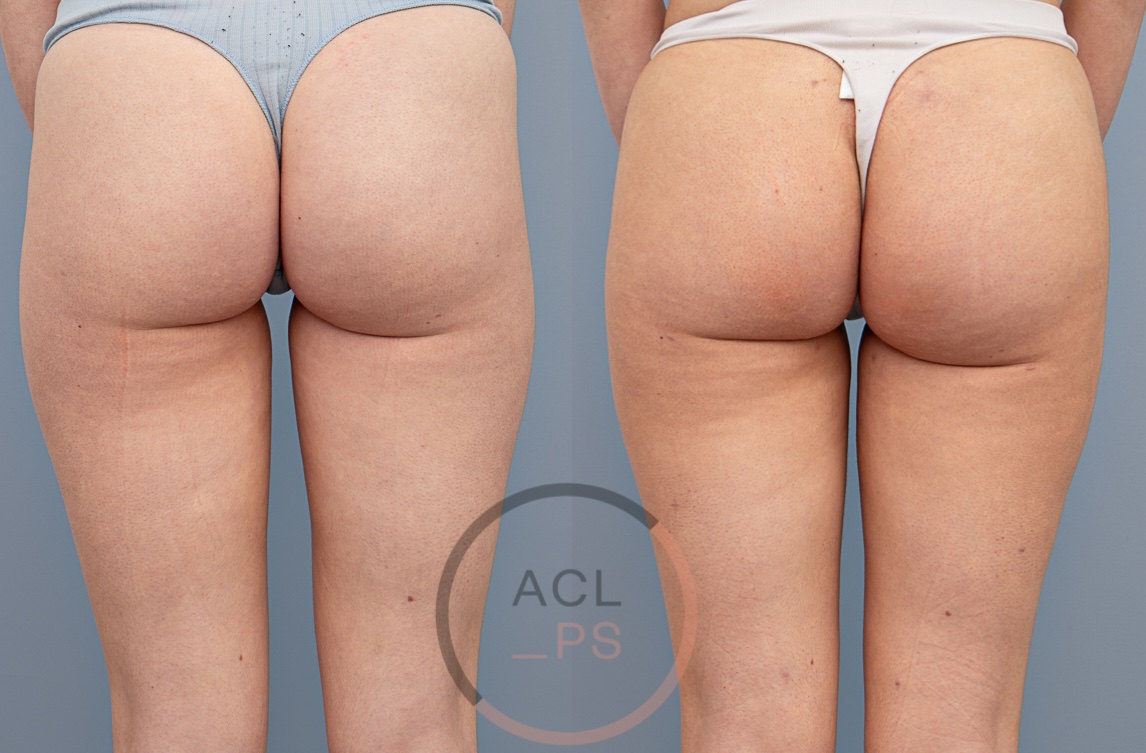
Compare the two following patients' donor sites:
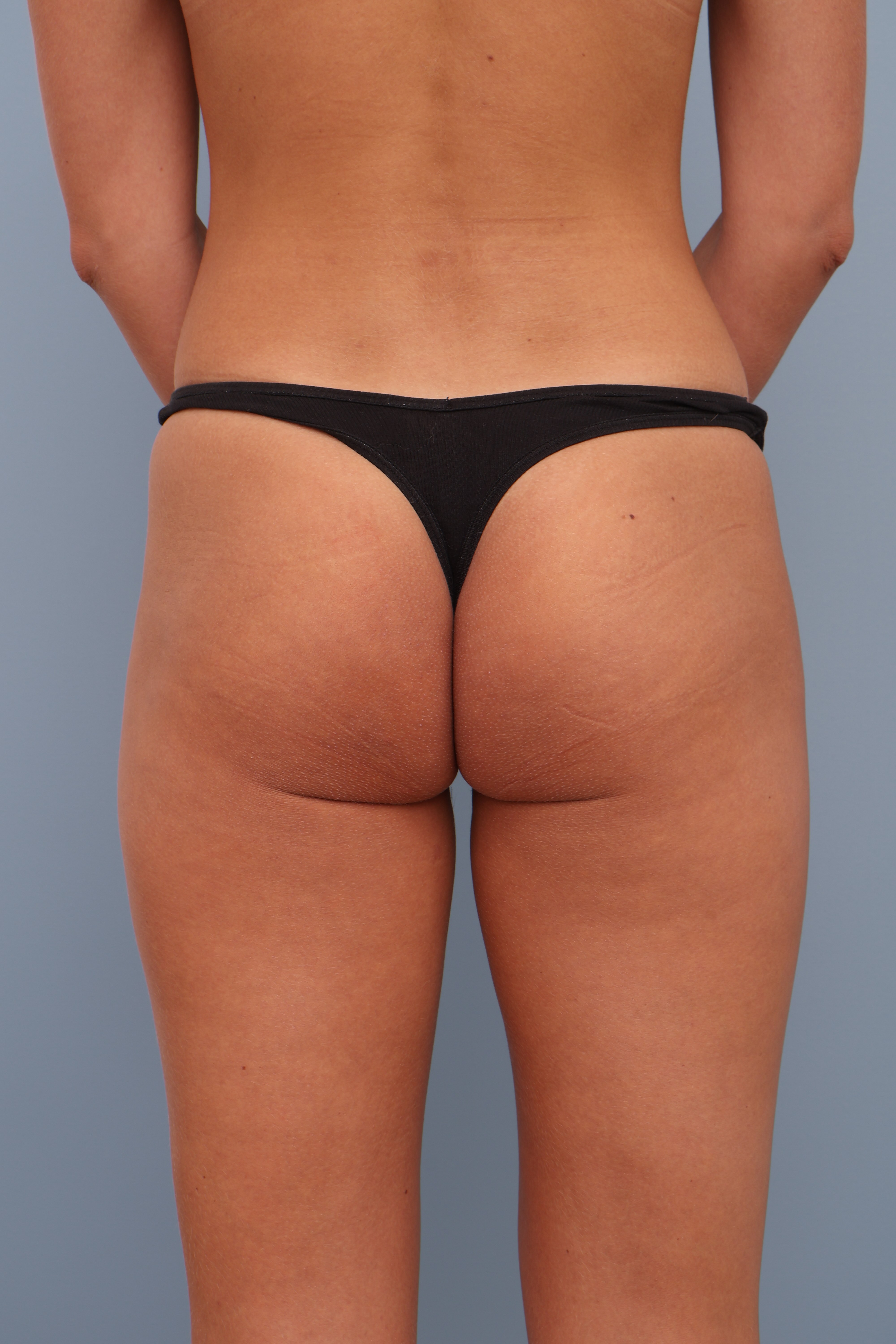

You can see that there is a subtlety to this - both of these patients are slim, but they present with a few differences that tells us that one will be a reasonable candidate, and will not. That certainly requires some experience on the part of the surgeon.
SO when I see a slim patient, in my head I am thinking "what volume of fat do i think I can obtain by doing liposuction before I start causing indentations and contour problems by doing the liposuction". If the answer is "not much", then we need to be thinking about different solutions for that patient.
Now, there is something else to think about when it comes to donor sites, but it is a much tricker one to address.
This is the concept of yield.
Yield, as it applies to fat transfer, is a poorly understood principle.
Basically, the idea is this:
Now, what we will find is that for any two patients, the volume of fat available to actually inject (once we've removed all the excess fluid, blood, oil and other shit that will decrease the survival of the fat) is going to be different. Sometimes, it will be VERY different.
Why? Often, we have no idea. Occasionally, there is a more obvious reason.
The obvious reason that I encounter (which I don't believe can be easily predicted pre-operatively) is an excessively fibrous quality to the subcutaneous fat plane. This may manifest in pre-op examination as slightly stiff fat which isn't especially mobile over the underlying muscle. This fat sometimes is hard to "pinch", but the patient seems like they have some reasonable deposits of fat that would be amenable to liposuction. This fibrous quality to the fat then manifests during surgery as a very "gritty" sort of sensation to the liposuction, and the surgeon has to apply much more effort to the passage of the cannula. It can also mean that a patient is at risk of minor contour irregularities after surgery. Most challengingly, this results in an operation where I have to sweat my guts out, spend a whole lot longer doing the lipo, all to generate a lower amount of fat for transfer than we would have liked.
The situation where we have no idea is a bit different. In these cases, we might seem like we are getting a reasonable volume during liposuction, but then with processing, we lose a lot more of that volume than we might expect. So in this sort of case, let's say we have 800cc of lipoaspirate (the "stuff" we have captured from doing liposuction). In the usual situation, we might then see that turn into somewhere between 400-500cc of useable fat. Great. But in other cases, 800cc of lipoaspirate might leave us with only 300cc of useable fat. Why? NFI. Annoyingly.
I think that yield is the reason for some patients to feel a bit bummed after fat transfer - they "feel" like they should have enough fat for a good transfer volume, and then we manage to scrape up enough for perhaps half a cup size increase, rather than the hoped for full cup size.
In short, yield (or low yield, to be more precise) is the thing that can catch us out, even when a patient (by all other criteria), looks like they should be a good candidate for fat transfer. Alas.
One final word: I should also link this conversation back to another topic: so-called "zombie" fat (or Alloclae) which has certainly been making waves in the US. I have been meaning to write about Alloclae for a while and I promise I will get onto that.
Step 4: Patient tolerances.
This is another one that is being glossed over way too much in the expanding online discussion that seems to be taking place online about fat transfer.
It is (like nearly any other operation) a discussion about risk.
Fat transfer is not without challenges (obviously) and it is not without risk (less obviously perhaps).
And, provided the surgeon knows what they are doing when it comes to fat transfer, the risk is very limited, but most of the risk sits with the liposuction element.
Here's the thing about lipo - no matter how good a surgeon thinks they are, it is technically a semi-blind procedure and it is VERY easy to accidentally cause minor problems. It's harder for sure to create really big problems (that requires a degree of surgical misjudgement) but the little contour dips and indentations - much easier, much more common, albeit normally not a deal-breaker. But they are there if you look hard enough.
And that is what I tell all my patients: I will say, during consent, that "100% of patients will have some evidence of a contour deformity IF THEY LOOK CLOSELY ENOUGH." It might require a very, very close look if the surgeon does the lipo well, but it will still be there.
So when it comes to patient tolerance, what I am talking about is the ability to tolerate minor imperfections as a result of the lipo. If you can't tolerate those imperfections (and for the really slim ladies, those minor imperfection can certainly be a little more apparent), then fat transfer is not the operation for you.
The final comment.
I don't want you to waste your time, or your money. And I don't want to do an operation for someone that doesn't lead to an appreciable outcome.
If fat transfer isn't an option for you, we'll tell you that. In that case, it really comes down to whether you are prepared to consider the option of a very small implant perhaps, as an alternative.


