
But is it real?
Good question. But, honestly TLDR: no. I don't think so. It's a bunch of illusionist's tricks stitched together to look (and sound) possible, whilst hiding the reality behind the claims.
Having said that, let's give ourselves a bit of time to understand what these folks are claiming to do, so that we can forensically unpick their claims (also, lol).
Ok, so first things first.
YOU CANNOT ACTUALLY LIFT THE BREAST WITHOUT DOING A MASTOPEXY. Which is to say, you cannot lift the breast without adding scars of some description on the front of the breast, be that around the areola, lollipop or anchor scars.
What you can (sort of, kind of, maybe in a very subtle and particularly temporary way) do is create the illusion of elevating the nipple without adding scars to the front of the breast. And as far as I can tell, most of the time when a surgeon uses the term "scarless mastopexy" what they are actually talking about is doing a cosmetic breast augmentation with a silicone breast implant.
The basic concept here is one of breast "inflation", which is an especially flawed concept.
Let me explain.
A very common claim made by surgeons who perform breast augmentation is that by placing a breast implant, the nipple position will be "elevated". This isn't actually a real effect, but what can certainly happen is the the nipple position relative to the breast/implant volume can change - essentially, if the nipple appears to sit higher on the breast mound, even if the nipple position hasn't actually been elevated at all, then there can be the impression of "lift". What actually happens though is that to account for that relative shift, what has happened is that the lower pole of the breast has expanded. So rather than the breast itself being elevated with the nipple (as in a standard mastopexy), the lower part of the breast expands whilst the nipple remains stationary, creating the impression of the nipple sitting higher on the breast (but not higher on the chest).
One of the extra steps in conjunction with a whacking great implant that has been described by a few different surgeons, but seems to rather popular in Brazil (of course) is associated with those pesky "dual-plane" techniques, or with a variant called the "muscle splitting biplane" technique. In this context, surgeons have described placing sutures between the edge of the Pec muscle, and the internal surface of the breast pocket created to fit the implant. The claim is that these sutures will allow the retracted muscle edge to pull up on the nipple, or at the very least, stabilise the nipple position.
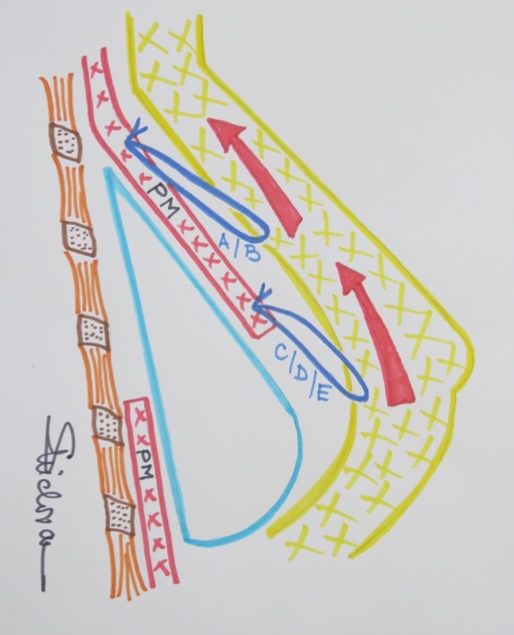
Now, it's all well and good (and a little bit cute) to think this will actually make a difference to the nipple position but in reality, there just isn't any evidence that the nipple goes up from its pre-operative position. Again, as I said above, yes, the nipple can look like it has gone up relative to the overall breast shape (once an implant is in and the bottom of the breast has expanded) but that is just a bit of an illusionists trick, a sleight-of-hand (sleight-of-breast?) if you will. Say hello, David Cop-a-feel (you need to be a certain age to get that - and the same goes for the image at the top of this article - I guess). *Jazz hands, flourish, bow for applause*
The other thing that sometimes gets bandied about and has the label "scarless breast lift" attached to it is some form of tissue tightening procedure. Now, there are a few things around that can create this effect but you can think of this as relating to "energy-based" interventions. More specifically, in the last few years we are talking about radio-frequency skin tightening which involves a minimally invasive procedure.
RF skin tightening is commercially available with a platform called Renuvion. It isn't widely used in Australia at this stage, but that may change.
Let's take a look.
So, the first thing to say is that, like a lot of things, the potential here is uncertain (due to a lack of data) and logically, outcomes would depend very much on the starting point. For example, if a young patient with really good quality tissues and only mild ptosis rocks up, then they may experience a slightly better outcome compared to an older patient with less elastic tissues, based on the purported mechanisms being employed by the machinery. The other thing to say, is that the impact of this technique is subtle - you'd best throw any expectation of significant changes in nipple position out the window.
In terms of research, there is a single study (that I am aware of) - Sterodimas et al. A Prospective Study on Helium-Based Plasma Radiofrequency for Minimally Invasive Breast Lift Scarless Mastopexy. Aesthet Surg J Open Forum. 2025 Mar 5;7 doi: 10.1093/asjof/ojaf004 - looking at this specifically in the breast. In that very limited study of only 15 patients, Renuvion was used with assessment of outcomes being entirely qualitative, based on photographs. Some of the results shown suggest aesthetic improvements, but as the even the authors accept, the results "are not easily captured with clinical photography". Probably a bigger issue though is that, in their attempt to show the results as positive, the authors have used photographs that are poorly matched, poorly standardised, and rather misleading.
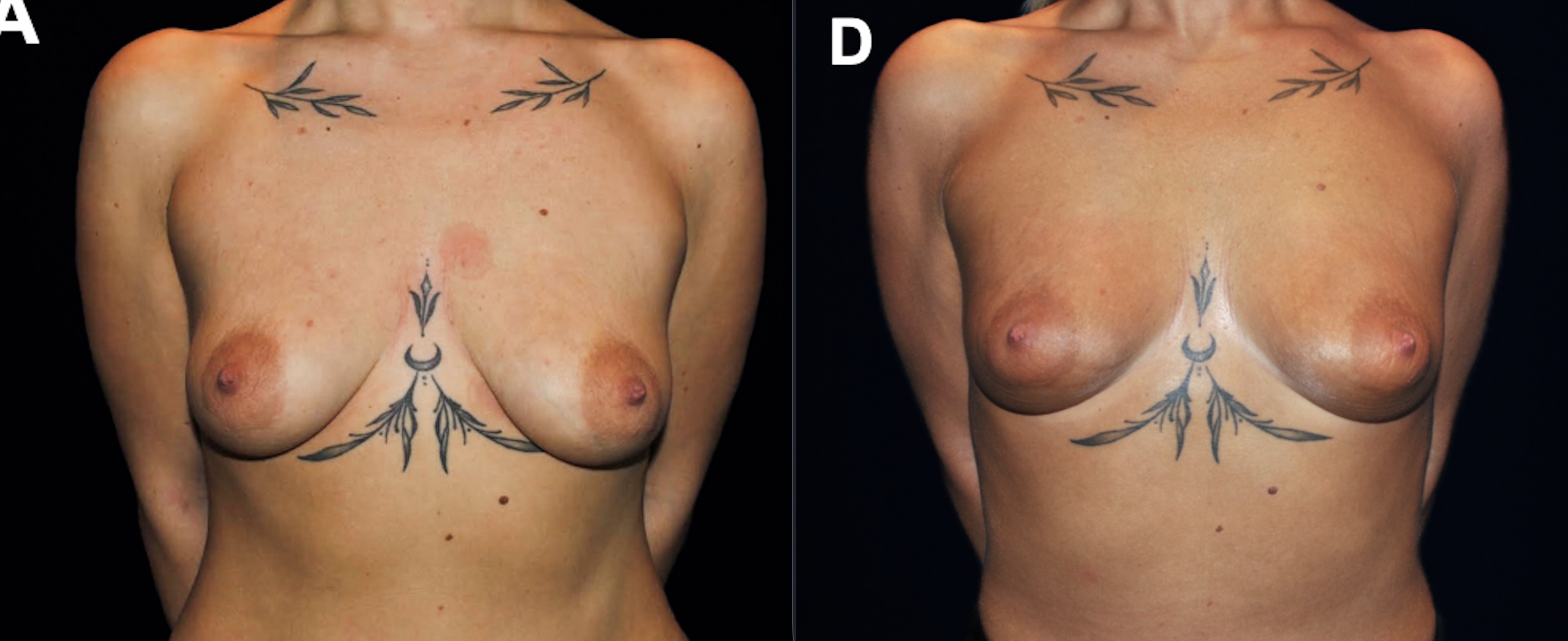
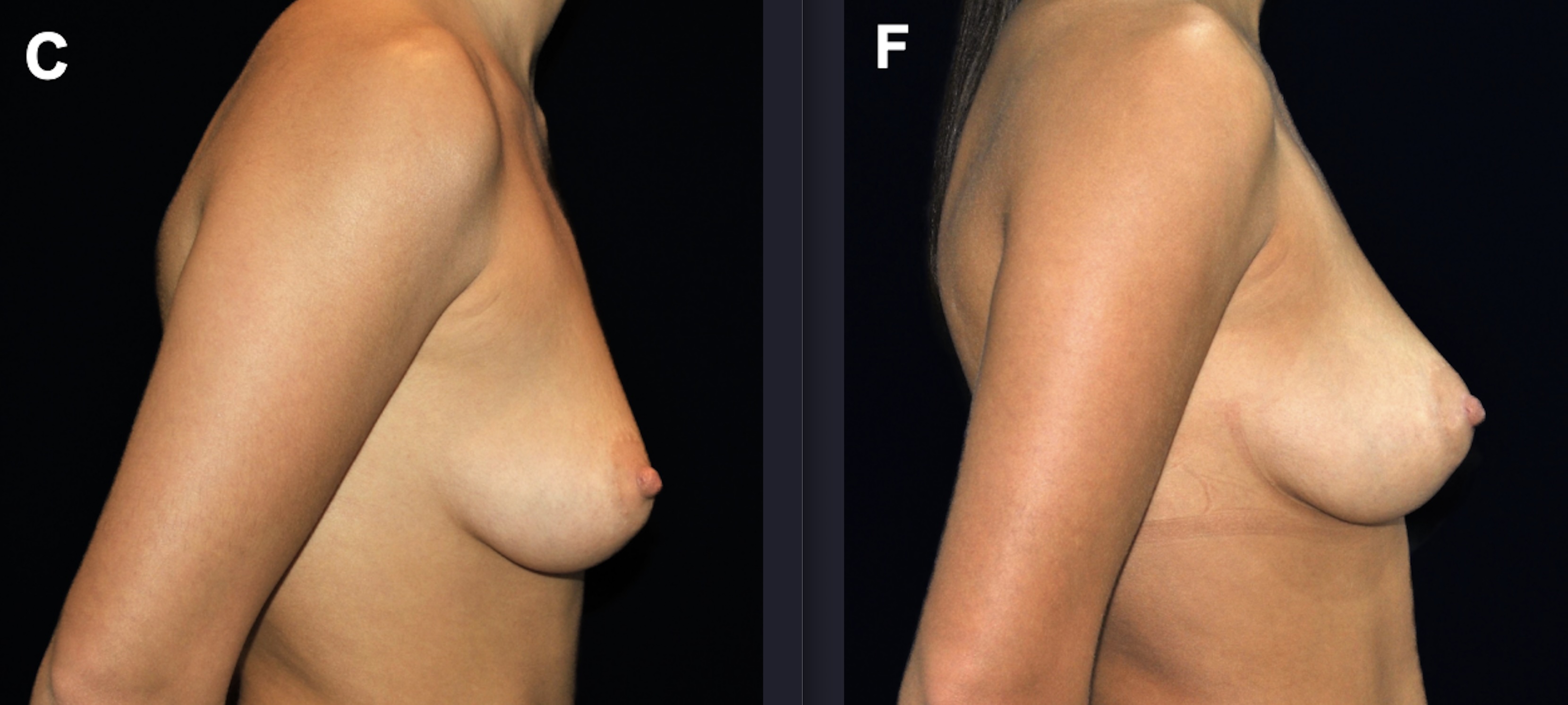
To be fair to these authors, they aren't claiming to set the world on fire with their technique, and they acknowledge that there are conflicting reports of both the safety and efficacy of Renuvion.
A strong counter to this paper comes in the form of an article by a chap called Eric Swanson, who I would best describe as a professional "dissenter". Dr Swanson (an American surgeon) has built an entire career from arguing against many of the prevailing trends in plastic surgery. I agree with some of his positions - others have a tendency to read as anachronistic, and he honestly can come across as a bit of a luddite. However, that is not necessarily the worst thing to be, given the history of plastic surgeons of doing really dumb shit without any evidence for it. Swanson's entire argument against Renuvion does also rest on the quality (or lack thereof) of the photography presented as evidence of outcomes - he loves to go back (in various studies) and edit photographs for things like angle or magnification, and then point out how certain measurements haven't changed. This approach is fair I think, but it also fails to account for the fact that clinical photography is not the ONLY measure that is relevant to either surgeons or patients.
Anyway, fair to say I won't be rushing to join the cue of surgeons buying Renuvion units any time soon.
So, where does that leave us?
Well, I think it safe to say that "scarless mastopexy" is about as useless and misleading as you might have expected. The old adage once again proves itself: if it sounds too good to be true, it probably is.
The only way that a breast changes without scars is if the patient the breast is attached to changes. Weight loss, cessation of breast feeding; that sort of thing. In that context, the breast can change. Is that what people are talking about, or indeed, what they're looking for? No. But there you go.
If you want a breast lift, accept the scars.
If you can't accept the scars, accept the breast as it is.
Oh, and for the last time: breast implants alone DO NOT "lift" the breast. Ever. Not even a little bit.


